
Farewell after 45 impressive years of Gérard Ghibaudo – Throwback at his life and Interview
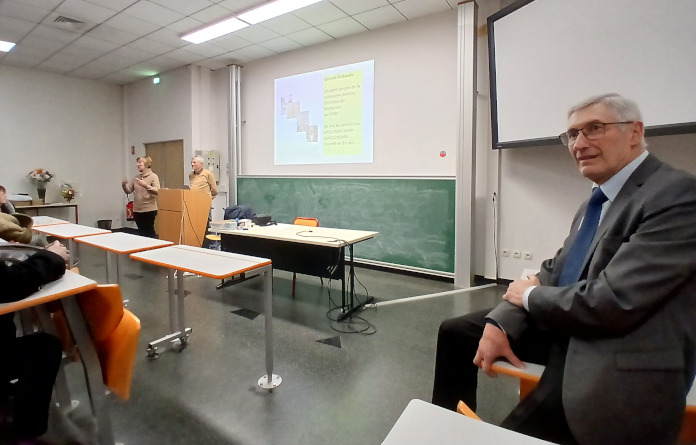
A Boy from the Countryside who Became a CNRS Research Director.
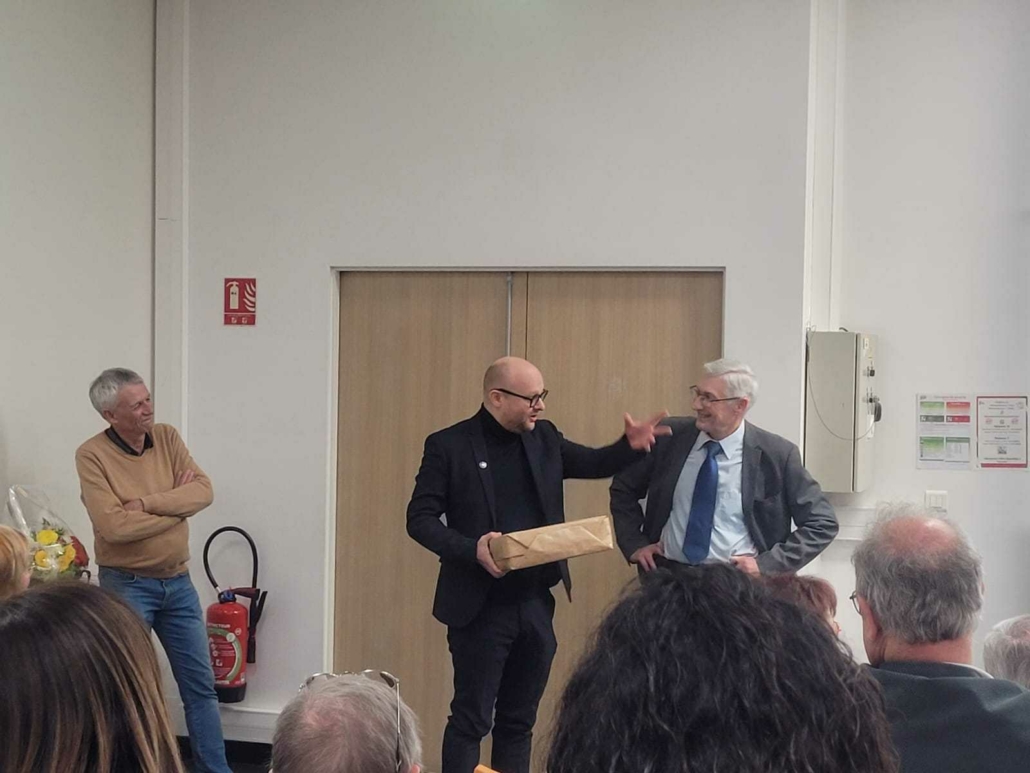
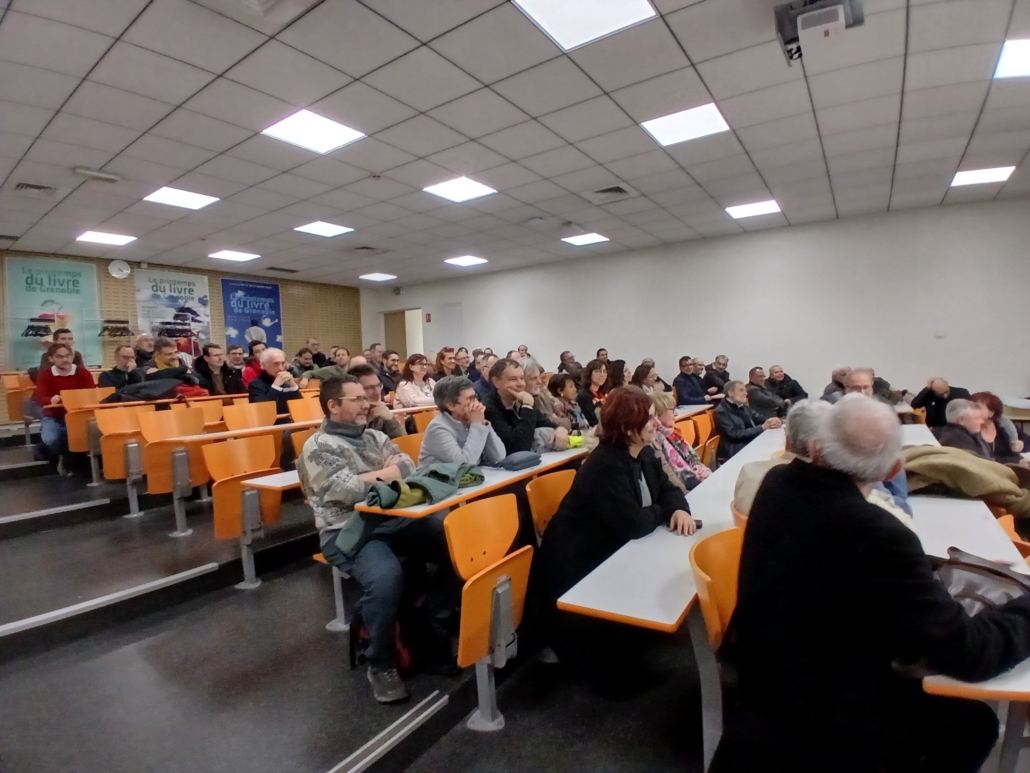
On Friday evening, we had the pleasure of celebrating an exceptional career and an even more exceptional person.
It was a wonderful moment that reminded us how much dedication, integrity, and friendship shape a career.
Gérard Ghibaudo was involved in several EU projects with SINANO Institute since the initial SiNANO project in 2005, he was Director of IMEP-LAHC (now CROMA), FMNT, and held many other key National and International responsibilities. He was kind enough to grant us one last interview before his departure.
What moments stand out as the most memorable or defining in your professional journey?
I was particularly impressed by my meeting and discussion with Sir Nevil Mott (Nobel prize in 1977) in Grenoble in 1984 when I was a young researcher freshly known for my work on silicon oxidation kinetics. He asked me to explain our novel approach including mechanical stress in the oxygen diffusion process. I could realize how humble and modest he was, despite being a star in solid-state physics. His human behavior has always been a source of example and inspiration for me.
Looking back, which two or three findings or achievements are you most proud of in your career?
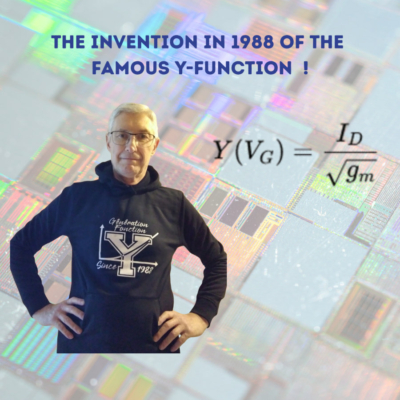
There are many but let say my work on the MOSFET parameter extraction using the so-called Y-function (=Id/sqrt(gm)) that was introduced in 1988* when I was in the Naval research Laboratory (Washington DC, USA) and that was generalized to MOSFET saturation operation region Ias well as to cryogenic conditions.
I am also especially proud of my findings on LF noise and RTS in MOSFETs that were very simple to apply in compact modelling for circuit simulation.
I also had several original contributions to MOSFET modelling and simulation including ballistic and tunneling transport in decananometer devices.
What advice would you consider most important to pass on to the next generation of students and researchers?
The main advice I would give to younger generations of researchers would undoubtedly be to always remain open and curious about scientific questions and to approach them with motivation and humility. We mustn’t listen too much to the “fake” experts who tend to discourage us from tackling these questions under the pretext that everything has already been solved elsewhere in larger labs! Nothing is ever completely solved, and sometimes simpler and more effective approaches exist.
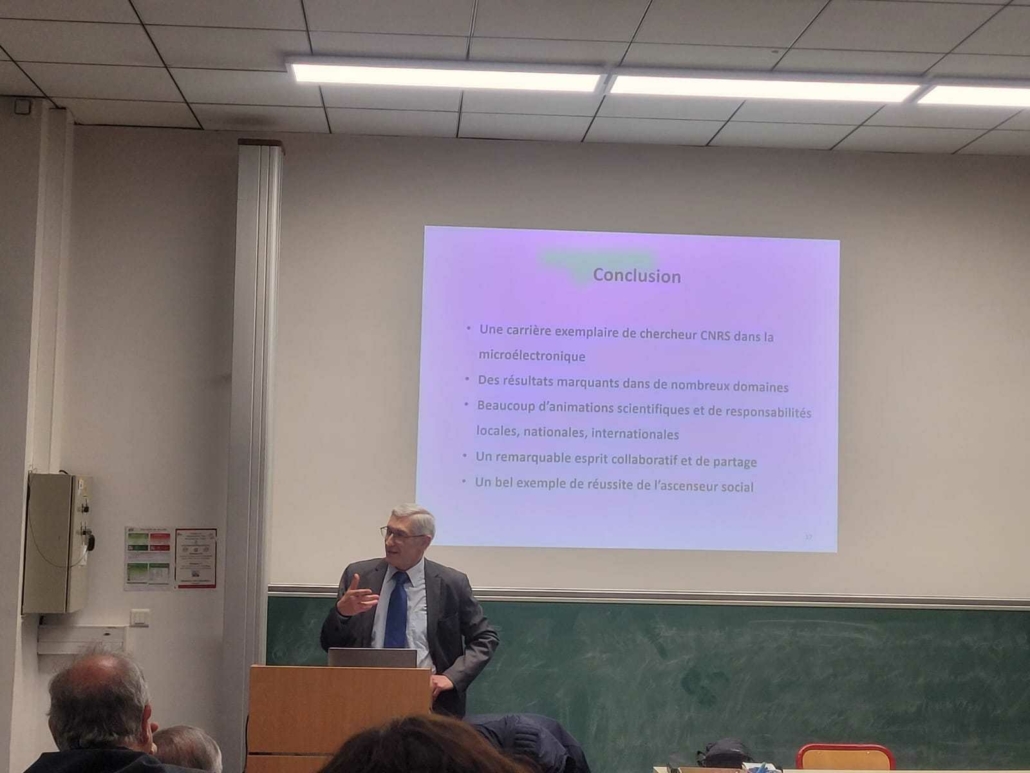
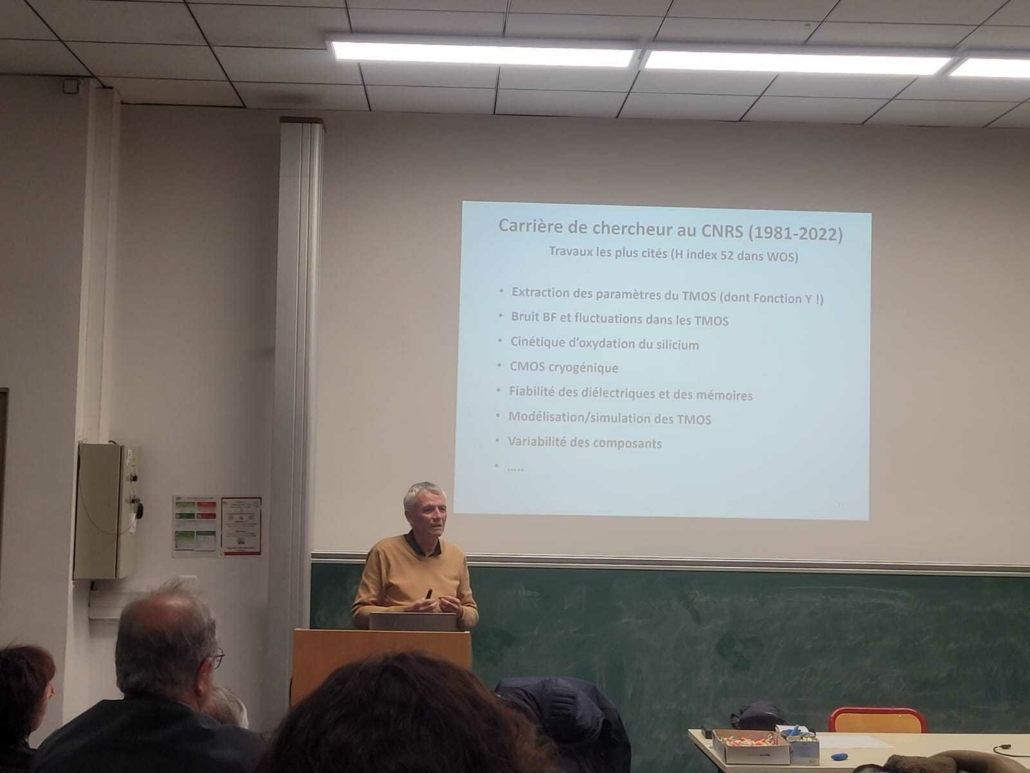
(Left) Gérard Ghibaudo Farewell after 45 years ! ; (right) excellent speech on his life and successes by Francis Balestra!
Three main achievements
The invention in 1988 of the famous Y-function (Y(Vg))
The Y-function method is a MOSFET parameter-extraction technique introduced by Gérard Ghibaudo in 1988. It is widely used to extract:
- the threshold voltage
- the effective mobility
- the series resistance
while minimizing the impact of mobility degradation and avoiding noisy numerical derivatives of the drain current.
Pioneer in LFN “Low-Frequency Noise” and RTS in MOSFETs, while accounting for correlated mobility fluctuations.
The new LFN model of the MOS transistor, with its simple and compact formulation, had a significant impact and became a reference in the international community.
The concept of flat-band voltage fluctuation was also very useful for studying and modeling random telegraph noise (RTN) in very small MOS transistors. This noise results from the elementary trapping-detrapping of an electron in the gate dielectric of the TMOS.
These studies highlighted the increasing influence of RTN in highly miniaturized MOS transistors and were mainly published in several articles in the journals Physica Status Solidi and Solid State Electronics during the 1990s.
The study of LFN and RTN continued in the following decades on subsequent CMOS technology generations with channel lengths from 0.5μm to 20nm and on SOI technologies or nanowires. All these activities on noise and RTN in MOS transistors gave him the opportunity to be invited to several international conferences such as ESSDERC 1994 or the International Conference on Noise and Fluctuations several times, for example, in 1995, 1999, 2003, 2005, 2019, and 2023.
This expertise on low-frequency noise also led him to be recruited as a “scientific advisor” at CNET (Meylan, 38).
Expert in Cryoelectronics about characterization and modelling of MOSFET operation down to liquid Helium temperature.
His work on low-temperature MOS transistors resonated with that of Francis Balestra, who worked on the electrical characterization of TMOS for space electronics applications in cooled electronics. With theitr PhDs, they advanced the knowledge on the characterization and modelling of MOS transistors operating at very low temperatures with numerous publications. This work gave us international renown and led to invitations to several international conferences. It should be noted that this activity in cryo-microelectronics at the end of the 1980s was somewhat disparaged by the French community as being “reheated” compared to IBM’s earlier work in the USA! Nevertheless, we quickly proved the validity of our research and its usefulness at the international level. This renown in cryogenic MOS transistors led him and Francis Balestra to synthesize all this work in a book co-edited and titled “Device and circuit cryogenic operation for low temperature electronics” published in 2001.
This work on the characterization and modeling of MOS transistors continued throughout the 1990s to 2020s and served as a generic method for investigating advanced CMOS technologies, or basic gate modeling of current, quantum effects, and ballistic transport in ultra-miniaturized MOS transistors. It even regained interest in 2020 with the advent of quantum technologies that favor cryogenic electronics.
Co-founder with F. Balestra of the “1st European Workshop on Low Temperature Electronics WOLTE 1” held in Grenoble in June 1994 (about 90 registered participants). It should be noted that WOLTE is still active with more than 15 editions since 1994. It is the only ongoing conference on cryogenic electronics
Most notable international distinctions are:
- IEEE Fellow in 2013 (see photo). The distinction of IEEE Fellow is awarded to less than 1% of IEEE members, a US-based international scientific association.
- Ranked among the top 14% of scientists among the 250,000 top-ranked scientists in the world according to Elsevier Stanford
Publications:
He has published 2 theses (DI and DE), 1 HDR report, 34 books or book chapters, 600 articles in international journals, 763 conference papers, including 86 invited lectures, 40 national conference papers, including 6 invited lectures, and 95 research contract reports.
In the “Web of Sciences” (WOS), he has a total of 954 referenced publications accumulating more than 14,885 citations, which represents an average of about 15 citations per article, 21 publications referenced per year since 43 years of career at CNRS. His 50 most cited publications total at least 50 citations, corresponding to an “h index” of 50: a very good value!
Overall:
- 130 PhD Students supervised including 50 CIFRE theses with industry partners
- 323 Thesis Juries – 96 as President
- 600+ Publications
- H index 52 (Web of Sceince)
- IEEE Fellow in 2013 for his work on the characterization and modeling of electronic devices.
- Ranked among the top 14% of the 250,000 highest-ranked scientists worldwide according to Elsevier–Stanford.
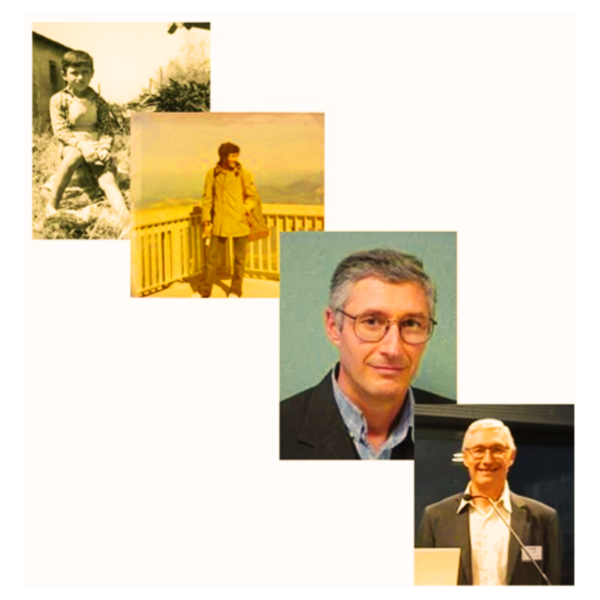
A Boy from the Countryside who Became a CNRS Research Director.
In the name of the SiNANO Institute, congratulations for your amazing career Gérard and enjoy a well-deserved retirement with your family!


 Minatec – CROMA
